Vishwabandhu
  • Home
  • Current Issue
  • Past Issues
    • Issue 1
    • Issue 2
    • Issue 3
    • Issue 4
    • Issue 5
    • Issue 6
    • Issue 7
    • Issue 8
    • Issue 9
  • About
  • Contribute

china steps up, a new era has dawned in world politics

4/29/2023

0 Comments

 
MK Bhadrakumar
Picture
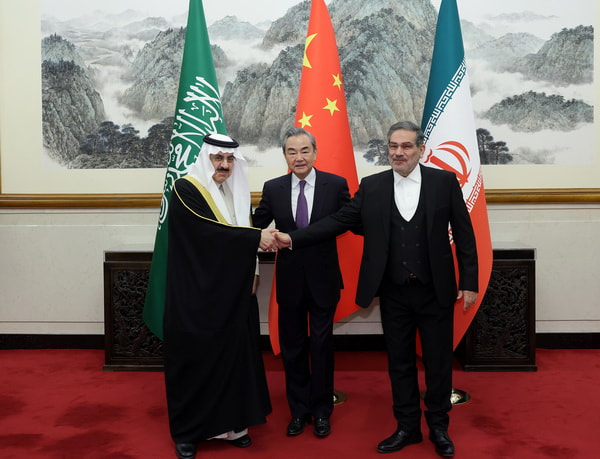
The agreement announced on Friday in Beijing regarding the normalisation of diplomatic relations between Saudi Arabia and Iran and the reopening of their embassies is a historic event. It goes way beyond an issue of Saudi-Iranian relations. China’s mediation signifies that we are witnessing a profound shift of the tectonic plates in the geopolitics of the 21st century.

The joint statement issued on Friday in Beijing begins by saying that the Saudi-Iranian agreement was reached “in response to the noble initiative of President Xi Jinping.” The dramatic beginning goes on to state that Saudi Arabia and Iran have expressed their “appreciation and gratitude” to Xi Jinping and the Chinese government “for hosting and sponsoring the talks, and the efforts it placed towards its success.”

The joint communique also mentioned Iraq and Oman for fostering the Saudi-Iranian dialogue during 2021-2022. But the salience is that the United States, which has been traditionally the dominant power in West Asian politics for close to eight decades, is nowhere in the picture.

Yet, this is about the reconciliation between the two biggest  regional powers in the Persian Gulf region. The US retrenchment denotes a colossal breakdown of American diplomacy. It will remain a black mark in President Biden’s foreign policy legacy.

But Biden must take the blame for it. Such a cataclysmic failure is largely to be traced to his fervour to impose his neoconservative dogmas as an adjunct of America’s military might and Biden’s own frequent insistence that the fate of humankind hinges on the outcome of a cosmic struggle between democracy and autocracy.

China has shown that Biden’s hyperbole is delusional and it grates against realities. If Biden’s moralistic, ill-considered rhetoric alienated Saudi Arabia, his attempts to suppress Iran met with stubborn resistance from Tehran. And, in the final analysis, Biden literally drove both Riyadh and Tehran to search for countervailing forces that would help them to push back his oppressive,  overbearing attitude.

The US’ humiliating exclusion from the centre stage of West Asian politics constitutes a “Suez moment” for the superpower, comparable to the crisis experienced by the UK in 1956, which obliged the British to sense that their imperial project had reached a dead end and the old way of doing things—whipping weaker nations into line as ostensible obligations of global leadership —was no longer going to work and would only lead to disastrous reckoning.

The stunning part here is the sheer brain power and intellectual resources and ‘soft power’ that China has brought into play to outwit the US. The US has at least 30 military bases in West Asia — five in Saudi Arabia alone — but it has lost the mantle of leadership. Come to think of it, Saudi Arabia, Iran and China made their landmark announcement on the very same day Xi Jinping got elected for a third term as president.

What we are seeing is a new China under the leadership of Xi Jinping trotting over the high knoll. Yet, it is adopting a self-effacing posture claiming no laurels for itself. There is no sign of the ‘Middle Kingdom syndrome,’ which the US propagandists had warned against.

On the contrary, for the world audience — especially countries like India or Vietnam, Turkey, Brazil or South Africa — China has presented a salutary example of how a democratised multipolar world can work in future — how it is possible to anchor big power diplomacy on consensual, conciliatory politics, trade and interdependence and advance a ‘win-win’ outcome.  

Implicit in this is another huge message: China as a factor of global balance and stability. It is not only Asia-Pacific and West Asia who are watching. The audience also includes Africa and Latin America — in fact, the entire non-Western world that forms the big majority of world community who are known as the Global South.

What the pandemic and the Ukraine crisis have brought to the surface is the latent geopolitical reality accruing through decades that the Global South rejects the policies of neo-mercantalism pursued by the West in the garb of ‘liberal internationalism.’

The West is pursuing a hierarchical international order. None other than the EU foreign policy chief Josep Borrell blurted this out in an unguarded moment recently with a touch of racist overtone when he said from a public platform that ‘Europe Is a garden. The rest of the world Is a jungle, and the jungle could Invade the garden.’

Tomorrow, China could as well be challenging the US hegemony over the Western Hemisphere. The recent paper by the Chinese Foreign Ministry titled ‘US Hegemony and Its Perils’ tells us that Beijing will no longer be on the defensive.

Meanwhile, a realignment of forces on the world stage is taking place with China and Russia on one side and the US on the other. Doesn’t it convey a big message that on the very eve of the historic announcement in Beijing on Friday, the Saudi Arabian foreign minister Prince Faisal bin Farhan Al Saud landed suddenly in Moscow on a ‘working visit’ and went into a huddle with Foreign Minister Sergey Lavrov who was visibly delighted? (here, here and  here  )

Of course, we will never know what role Moscow would have played behind the scenes in coordination with Beijing to build bridges between Riyadh and Tehran. All we know is that Russia and China actively coordinate their foreign policy moves. Interestingly, on March 6, President Putin had a telephone conversation with Iran’s President Ebrahim Raisi.  

Audacity of hope

To be sure, the geopolitics of West Asia will never be the same again. Realistically, the first sparrow of spring has appeared but the ice was melted for only three or four rods from the shore. Nonetheless, the sun’s rays give hope, signalling warmer days to come.

Conceivably, Riyadh won’t have any truck further with the diabolical plots hatched in Washington and Tel Aviv to create an anti-Iran alliance in West Asia. Nor is it in the realms of possibility that Saudi Arabia will be party to any US-Israeli attacks on Iran.

This badly isolates Israel in the region and renders the US toothless. In substantive terms, it scatters the Biden administration’s feverish efforts lately to cajole Riyadh to join Abraham Accords.

However, significantly, a commentary in Global Times noted somewhat audaciously that the Saudi-Iranian deal “set a positive example for other regional hotspot issues, such as the easing and settlement of the Israeli-Palestinian conflict. And in the future, China could play an important role in building a bridge for countries to solve long-standing thorny issues in the Middle East just as what it did this time.”

Indeed, the joint communique issued in Beijing says, “The three countries [Saudi Arabia, Iran and China] expressed their keenness to exert all efforts towards enhancing regional and international peace and security.” Can China pull a rabbit out of the hat? Time will tell.

For the present, though, the Saudi-Iranian rapprochement will certainly have positive fallouts on the efforts toward a negotiated settlement in Yemen and Syria as well as on the political situation in Lebanon.

The joint communique emphasises that Saudi Arabia and Iran intend to revive the 1998 General Agreement for Cooperation in the Fields of Economy, Trade, Investment, Technology, Science, Culture, Sports, and Youth. All in all, the Biden administration’s maximum pressure strategy toward Iran has crashed and the West’s sanctions against Iran are being rendered ineffectual. The US’ policy options on Iran have shrunk. Iran gains strategic depth to negotiate with the US.  

The cutting edge of the US sanctions lies in the restrictions on Iran’s oil trade and access to western banks. It is entirely conceivable that a backlash is about to begin as Russia, Iran and Saudi Arabia — three top oil/gas producing countries start accelerating their search for payment mechanisms bypassing the American dollar.

China is already discussing such an arrangement with Saudi Arabia and Iran. China-Russia trade and economic transactions try to shun American dollar for payments. It is well understood that any significant erosion in the status of the dollar as ‘world currency’ will not only spell doom for the American economy but will cripple the US’ capacity to wage ‘forever wars’ abroad and impose its global hegemony.

The bottom line is that the reconciliation between Saudi Arabia and Iran is also a precursor to their induction as BRICS members  in a near future. To be sure, there is a Russian-Chinese understanding already on this score. The BRICS membership for Saudi Arabia and Iran will radically reset the power dynamic in the international system.

MK Bhadrakumar is a former Indian ambassador. This article is republished with permission from his blog.
0 Comments
Report on Nai Taleem and training for socialism

4/29/2023

0 Comments

 
Picture
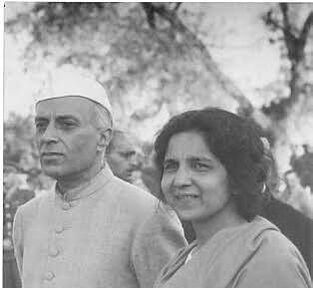
A reading and discussion group called ‘Nai Taleem’ has been meeting with the initiative of the Gandhi Global Family. The group was started as a way to discuss and debate the ideas that can form the future of Indian and world humanity. For this purpose, the group plans to read writings of figures who participated in and led world revolutionary movements such as Mahatma Gandhi, Jawaharlal Nehru, Aruna Asaf Ali, Martin Luther King Jr., W.E.B. Du Bois, Ho Chi Minh, Amilcar Cabral, Kwame Nkrumah, VI Lenin and many others. These figures will be read because history is not merely the past, but it is something that all people carry with them in their assumptions and ways of being. It is to history we look to clarify our future. Further, the group hopes to develop a new pedagogy, or a way of teaching that comes naturally from the Indian and world freedom struggles for an education of a new type. The group is open to all and no previous experience is required.

Here we are reprinting an essay by Aruna Asaf Ali, Training for Socialism, that was read in the last session, along with its translation in hindi. 

Training for Socialism
Aruna Asaf Ali
(1965)

This is the seventy fifth year since Jawaharlal Nehru was born, and the first he is not with us. It is no longer like what it used to be when with incorrigible faith we comforted ourselves saying : "Nehru is with us : All is well with the world."

A sadness that is hard to define comes upon us as we try to reconcile ourselves to the thought that this business of living has to be seen through even though Nehru is no longer alive. There are several questions that keep haunting us.

Is the age to which his sophisticated and enlightened mind gave its tone and timbre really over? Dare we believe those who make half-hearted gestures and assure the people that Nehru's unfinished tasks will be accomplished?

Loud in their protestations of love and loyalty to Nehru and his ideas, are they not frittering away their inheritance by highlighting what is trivial and ignoring the significant? Their mechanical professions of faith and belief in his ideals have an empty ring and the fact that among the men and women who are at the helm of affairs today there are quite a few who have denied him even before the proverbial cock crew thrice, intensifies the uneasiness.

Instead of providing the people with a decisive, coherent and united leadership, those in high places seem to revel in the thought that they are ruling the destinies of 500 million Indians.

Obviously, these musings can be treated as extremely subjective reflections. They probably are exaggerated expressions of an anxiety complex, and -present too gloomy a view of the future. But clearly we are going through a period of intense confusion caused by the absence of one who directed our affairs for nearly half a century.

The negative aspects of our backward and slow-moving conditions ought not, of course, always dominate our thoughts and we should be less inclined to underestimate the positive achievements of the post-­liberation period. Defeatism and a feeling of dejection have to he fought back in the belief that the lessons from Nehru's life and teachings can never be forgotten. We must assure ourselves that they cannot but find creative fulfilment in times to come, because his ideas were based on concepts and principles that are the warp and woof of civilization and the processes that take humanity forward.

New Leaders

Despite the apparent disregard and even deliberate distortion of what Nehru stood for (in circles hostile to his message of social equality ), it has to become the rallying point for the victims of social exploitation and oppression.

To whom can we turn for the sustenance of our faith in the inevitable triumph of his ideas? An entirely new leadership must emerge from amidst the people so that men and women with the passion and zeal of Jawaharlal Nehru may lead them in their search for a better life.

Immediately, this new leadership, individual and collective, will have to hold itself responsible for creating a climate wherein the present vagueness about our objectives will disappear; otherwise confusion in an increasing measure is bound to continue. But to achieve clarity, the theoretical roots of a society in which the majority are the worst sufferers and the minority its beneficiaries, have to be understood by the masses. An organisation to study the history of revolutions and the emergence of socialist thought will be necessary on a mass scale because the days when Nehru wrote and spoke to the people so that they may learn from the past and understand the present, are over.

His ‘Classes’

His vastly attended meetings were more in the nature of massive study classes than just political gatherings. His was never a fiery orator's performance; they were more like lectures one listens to in a class room. Like Gandhiji before him, he took the people's hunger for learning for granted. because he knew that the bulk of them were denied the opportunity to read or write. They had to be told how they could and should behave as a people.

Nehru was their teacher as also the man who compelled them to resist their alien and authoritarian overlords. Post-Nehru India will therefore require his substitute as a collective educator, and those who perform this task will have to work hard to acquire the intellectual capacity to comprehend the nature and meaning of modern times. A great deal will depend on their ability to think for themselves and suggest practical solutions. For this Nehru's writings over the years can provide a considerable amount of thought-provoking material.

However, the initiation and organisation of a well-planned study movement must steer clear of such politicians as arc obsessed with the struggle for power for factional and personal ends.

Recently, several laudable attempts at propagating socialism have failed to enthuse the people because they were unable to inspire confidence. They were suspect because the motivating factor appeared to be the attainment of personal influence and not the spread of knowledge for the commonly felt need to change social conditions.

Jawaharlal Nehru was fully aware of the need to make organised and sustained efforts to politicize the people. He knew they would function responsibly only when their awareness was based on intellectual awakening and not merely that of emotional provocation. He very often spoke of the manner in which, soon after the 1917 Revolution in the Soviet Union, "Lenin Corners" were organised in every urban and rural district to enable the people to grasp the significance of their leader's interpretation of Marxism and how it could revolutionise society.

In fact he had earnestly, perhaps wishfully, hoped that the Indian experiment in Community Development would impart the message of India's renaissance to her simple working people in their own language. But he was disillusioned because of late he mistook the career bureaucrat for the impassioned crusader. Instead had he succeeded in winning the support of Congressmen and others with socialist convictions for carrying out this important national work, he might have witnessed that "fruition of desire" which is "the end of our willing." But that was not to be.

Nehru denied himself the opportunity of organising a cadre to whom socialism was a matter of conviction and not an opportunity for self-advancement. As a result, none of the several officially sponsored agencies have succeeded in inspiring the sort of patriotism that seizes a newly liberated people with the urge to live and strive for ushering in the good life for all. 

To Serve

This task of stirring a human being deeply and making him a catalytic factor cannot be left to “experts” or “specialists”. We have to entrust this task primarily to men and women who have a natural aptitude to serve others rather than only themselves, and to whom self-effacement comes easily. They alone can bring about a just political and social  order because they alone can earn the people's trust and confidence. To find men and women of such stuff will not be easy. The history of other countries tells us how long it takes to find men who are willing to endure the hardships and heart-breaks of turning chaos into order.

In some ways we were fortunate because a Gandhi and a Nehru emerged together and carried the cross almost entirely on their own strength. Their individualised and inspired mission made them institutions. Consequently in their lifetime they were able to make the masses respond so magnificently that collective and organised work appeared superfluous. However, that historic period is over and no longer can we ignore the need for organised action. Without centralised direction at every level—economic, social and cultural—in fact, in every sphere of our existence, the concept of the new socialist society that must replace the present will continue to be vague and shadowy.

The Question

Nehru had the foresight and vision to initiate the struggle for socialism. It was his conviction that the Indian National Congress alone could lead this struggle because of its anti- imperialist traditions and mass character. Will the Congress be able to fulfil his high expectation
and carry on the task of remaking society? Have its leaders the necessary incentive to refashion the party's structure, its mode of functioning, and above all its attitude to socialists outside its organizational fold? Should the answer to these questions be in the affirmative, then the
Congress will be in a position to unite and lead the people once again and justify Jawaharlal Nehru's faith in its capacity to bring about revolutionary transformations in this land of hope and despair.


गांधी ग्लोबल परिवार की पहल पर 'नई तालीम' नामक एक पठन और चर्चा ग्रूप की बैठक हो रही है। चर्चा और बहस उन विचारों पर होगी जो भारतीय और विश्व मानवता के भविष्य का निर्माण कर सकते हैं. इस उद्देश्य के लिए, समूह महात्मा गांधी, जवाहरलाल नेहरू, अरुणा आसफ अली, मार्टिन लूथर किंग जूनियर, डब्ल्यू ई बी दूबोइस, हो ची मिन्ह, अमिलकार कब्राल,क्वामे नक्रुमाः, व् ई लेनिन और कई अन्य विश्व क्रांतिकारी आंदोलनों में भाग लेने और नेतृत्व करने वाले लोगों के लेखन को पढ़ने की योजना बनाई है। इन आंकड़ों को पढ़ा जाएगा क्योंकि इतिहास केवल अतीत नहीं है, बल्कि वह है जो सभी लोग अपनी धारणाओं और होने के तरीकों में अपने साथ लेकर चलते हैं। हम इतिहास को समझते हैं ताकि हम अपने भविष्य को स्पष्ट कर सकें।  इसके अलावा, समूह एक नई शिक्षाशास्त्र, या शिक्षण का नया तरीका विकसित करने की उम्मीद करता है जो भारतीय और विश्व स्वतंत्रता संग्राम से स्वाभाविक रूप से आता है। सभी का समूह में स्वागत है, और किसी पिछले अनुभव की आवश्यकता नहीं है।

यहां हम अरुणा आसफ अली का एक निबंध, ट्रेनिंग फॉर सोशलिज्म, को हिंदी में अनुवाद के साथ पुनर्मुद्रित कर रहे हैं, जिसे पिछले सत्र में पढ़ा गया था।

समाजवाद के लिए तैयारी 

अरुणा आसफ अली
(1965)

जवाहरलाल नेहरू के जन्म को आज 75 वर्ष हुए हैं, और यह पहला वर्ष है जब वह हमारे बीच नहीं हैं। आज वह समय नहीं रहा जो पहले था जब हम अमिट विश्वास के साथ खुद को यह कहते हुए सांत्वना देते थे: " नेहरू हमारे साथ हैं: दुनिया में  सब ठीक है।"

हम पर एक ऐसा दुःख छा जाता है जिसे परिभाषित करना कठिन है, जब यह अहसास होता है की आज नेहरू हमारे साथ नहीं हैं पर फिर भी ज़िन्दगी जीने का काम आगे बढ़ाना है। ऐसे कई सवाल हैं जो हमें परेशान करते रहते हैं।

क्या वह युग जिसे उनके विद्वान् और प्रबुद्ध दिमाग ने उसका भाव दिया था, वास्तव में खत्म हो गया है? क्या हम उन लोगों पर विश्वास कर सकते हैं जो आधे-अधूरे मन से इशारे करते हैं और जनता को आश्वस्त करते हैं कि नेहरू के अधूरे कार्य पूरे होंगे?

भले ही वह नेहरू और उनके विचारों के प्रति प्रेम और वफादारी व्यक्त करें, क्या वे तुच्छ चीजों को उजागर करके और महत्वपूर्ण को अनदेखा करके अपनी विरासत को बर्बाद नहीं कर रहे हैं? वह जिस औपचारिक तरीके से नेहरू के आदर्शों में अपने विश्वास को घोषित करते हैं, कहीं उस पर भरोसा करना मुश्किल है। नेहरू को गए एक साल भी नहीं हुआ लेकिन आज जो लोग नेतृत्व में हैं, उनमें से कुछ ऐसी भी हैं जिन्होंने नेहरू को नकारना शुरू कर दिया है।  

लोगों को एक असंदिग्ध, स्पष्ट और एकजुट नेतृत्व प्रदान करने के बजाय, उच्च पदों पर बैठे लोग इस विचार में आनंदमय  प्रतीत होते हैं कि वे 50 करोड़ भारतीयों की तक़दीर पर शासन कर रहे हैं।

जाहिर है, इन चिंतनों को बहुत सब्जेक्टिव माना जा सकता है। वे शायद एक घबराहट की अभिव्यक्ति हैं, और भविष्य का बहुत ही निराशाजनक दृश्य प्रस्तुत करते हैं। लेकिन यह स्पष्ट है की हम बहुत अव्यवस्थित दौर से गुज़र रहे हैं जिसका कारण लगभग आधी सदी तक हमें निर्देशित करने वाले की अनुपस्थिति है।  

बेशक, हमारी पिछड़ी और धीमी गति से बदलती हुई स्थितियों के नकारात्मक पहलू हमेशा हमारे विचारों पर हावी नहीं होने चाहिए और हमें आज़ादी के बाद की सकारात्मक उपलब्धियों की कम आंकना नहीं करना चाहिए। पराजित और निराश भावनाओं को हमें इस विश्वास के साथ लड़ना होगा कि नेहरू के जीवन और शिक्षाओं से मिली सीख को कभी भुलाया नहीं जा सकता। हमें खुद को आश्वस्त करना चाहिए कि आने वाले समय में उनके विचारों को रचनात्मक पूर्णता मिलेगी, क्योंकि उनके विचार उन अवधारणाओं और सिद्धांतों पर आधारित थे जो सभ्यता की नींव है और जो मानवता को आगे बढ़ा सके।

नए नेता

नेहरू के विचारों की स्पष्ट उपेक्षा और उन्हें जान-बूझकर तोड़-मरोड़ कर पेश करने के बावजूद (सामाजिक समानता के उनके संदेश के प्रति विरोधी समूहों में), उन विचारों को शोषितों और पीड़ितों के लिए एकजुटता का प्रतीक बनना होगा।

उनके विचारों की अनिवार्य जीत में हम अपने विश्वास को सहारा देने के लिए किसके पास जा सकते हैं? लोगों के बीच से एक पूरी तरह से नया नेतृत्व उभरना ज़रूरी है ताकि जवाहरलाल नेहरू जैसे जुनून और उत्साह के साथ ऐसे पुरुष और महिलाएं आगे आएं जो जनता को अपने बेहतर जीवन की तलाश में नेतृत्व प्रदान कर सकें।

तत्काल में, इस नए नेतृत्व, व्यक्तिगत और सामूहिक, को एक ऐसा माहौल बनाने के लिए खुद को जिम्मेदार मानना होगा जिसमें हमारे उद्देश्यों की वर्तमान अस्पष्टता गायब हो जाए; वरना हमारी अस्पष्टता की स्थिति बढ़ती ही जाएगी। लेकिन स्पष्टता प्राप्त करने के लिए, एक ऐसे समाज की सैद्धांतिक जड़ें जनता को समझना ज़रूरी है जिसमें अधिकांश आबादी सबसे ज्यादा पीड़ित हैं और मुट्ठीभर इसके लाभार्थी हैं। क्रांतियों के इतिहास और उभरते समाजवादी विचार का अध्ययन करने के लिए बड़े पैमाने पर एक संगठन की आवश्यकता है क्योंकि वह दिन गए जब नेहरू लोगों को लिखते और बोलते थे ताकि वे हमारे अतीत से सीख सकें और वर्तमान को समझ सकें।

उनकी 'कक्षाएं'

उनकी बैठकें, जिनमें सैकड़ों लोग आते थे, सिर्फ राजनीतिक सभाएं ही नहीं, बल्कि बड़े पैमाने पर अध्ययन की कक्षाएँ थीं। उनका प्रदर्शन कभी भी उग्र वक्ता का प्रदर्शन नहीं था; वे किसी कक्षा में सुने जाने वाले व्याख्यानों की तरह था। गांधी जी की तरह, उन्होंने लोगों की सीखने की अभिलाषा को मान के ही चला। क्योंकि वह जानते थे कि उनमें से अधिकांश लोगों को पढ़ने या लिखने का अवसर नहीं दिया गया था। उन्हें बताना था कि उन्हें एक-जन के रूप में कैसे कदम उठाने चाहिए और कैसे नहीं। 

नेहरू उनके शिक्षक होने के साथ-साथ वह व्यक्ति भी थे जिन्होंने उन्हें अपने विदेशी और तानाशाही शासकों का विरोध करने के लिए हौसला दिया। इसलिए नेहरू के बाद के भारत को एक सामूहिक शिक्षक की आवश्यकता है, और जो लोग इस कार्य की जिम्मेदारी उठाएंगे उन्हें आधुनिक समय की स्वरूप और सच्चाई को समझने के लिए जो बौद्धिक क्षमता ज़रूरी है उसे हासिल करने के लिए कड़ी मेहनत करनी होगी। बहुत कुछ उनकी खुद के लिए सोचने और व्यावहारिक समाधान सुझाने की क्षमता पर निर्भर करेगा। इसके लिए वर्षों से नेहरू के लेख काफी मात्रा में विचारोत्तेजक साबित हो सकते हैं।

हालाँकि, एक सुनियोजित अध्ययन आंदोलन की शुरुआत और संगठन को ऐसे राजनेताओं से दूर रहना चाहिए जो गुटों और व्यक्तिगत हितों के लिए सत्ता के संघर्ष से ग्रस्त हैं।

हाल ही में, समाजवाद के प्रचार-प्रसार के कई प्रशंसनीय प्रयास, लोगों को उत्साहित करने में विफल रहे हैं क्योंकि वे लोगों में  विश्वास प्रेरित ना कर पाए। वह संदेहयुक्त थे क्योंकि ऐसा लगता था की यह प्रयास व्यक्तिगत प्रतिष्ठा की लालच से ज़्यादा प्रेरित थे न कि सामाजिक परिस्थितियों को बदलने की आवश्यक्ता से।

जवाहरलाल नेहरू लोगों के राजनीतिकरण के लिए संगठित और निरंतर प्रयास करने की आवश्यकता से पूरी तरह अवगत थे। उन्हें पता था कि वे जिम्मेदारी से तभी कार्य करेंगे जब उनकी जागरूकता बौद्धिक जागृति पर आधारित होगी न केवल भावनात्मक उत्तेजना पर।  नेहरू इस बारे में अक्सर बात करते थे कि किस तरह सोवियत संघ में 1917 की क्रांति के तुरंत बाद हर शहरी और ग्रामीण जिले में "लेनिन कॉर्नर" का आयोजन किया गया था ताकि लोग अपने नेता की मार्क्सवाद की व्याख्या का महत्व और उन विचारों का सामाजिक क्रांति से रिश्ता समझ सकें। 

वास्तव में, उन्होंने ईमानदारी से, शायद थोड़ा आशावादी सपना देखा था कि देश के पुनर्जागरण का संदेश सामान्य मेहनतकश लोगों तक, उनकी अपनी भाषा में, भारत का नया कम्युनिटी डेवलपमेंट एक्सपेरिमेंट पहुंचाएगा। लेकिन उनका मोहभंग हो गया क्योंकि उन्होंने गलती से करियर ब्यूरोक्रेट को एक अवधारित सैनिक समझ लिया था। इसके बजाय यदि वह इस महत्वपूर्ण राष्ट्रीय कार्य को करने के लिए समाजवादी विश्वास वाले कांग्रेसियों और अन्य लोगों का समर्थन हासिल करने में सफल होते, तो शायद उन्होंने "इच्छाओं की पूर्ति" देखी होती, जो "हमारी कल्पनाओं का लक्ष्य" है। लेकिन वह नहीं हो सका।  

नेहरू ने खुद को एक ऐसे कैडर को संगठित करने का अवसर नहीं दिया, जिसके लिए समाजवाद दृढ विश्वास का विषय था और आत्म-उन्नति का अवसर नहीं। नतीजतन, आधिकारिक तौर पर प्रायोजित कई एजेंसियों में से कोई भी उस तरह की देशभक्ति को प्रेरित करने में सफल नहीं हुई है, जो एक हाल ही में आज़ाद लोगों को जीने और बेहतर जीवन के लिए संघर्ष करने की ललक से भर देती है।

सेवा करना

मनुष्य को गहराई से प्रेरित करने और उसे एक उत्प्रेरक कारक बनाने का यह कार्य "एक्सपर्ट्स" या "स्पेशलिस्ट्स" के भरोसे नहीं छोड़ा जा सकता। हमें यह कार्य मुख्य रूप से उन पुरुषों और महिलाओं को सौंपना है, जिनमें स्वयं के बजाय दूसरों की सेवा करने की स्वाभाविक क्षमता है, और जिनके लिए आत्म-विलोपन आसान है। वे अकेले ही हैं जो एक न्यायपूर्ण राजनीतिक और सामाजिक व्यवस्था ला सकते हैं क्योंकि वे ही लोगों का विश्वास और भरोसा जीत  सकते हैं। इस तरह के आदमी और औरत को ढूंढ़ना आसान नहीं होगा। अन्य देशों का इतिहास हमें बताता है कि ऐसे लोगों को खोजने में कितना समय लगता है जो अराजकता को व्यवस्था में बदलने की कठिनाइयों और उस रास्ते के दुख सहने के लिए तैयार हैं।

कुछ मायनों में हम भाग्यशाली थे क्योंकि एक गांधी और एक नेहरू एक साथ उभरे और उन्होंने लगभग पूरी तरह से अपने बल पर इस जिम्मेवारी को उठाया। उनके व्यक्तिगत और प्रेरित मिशन ने उन्हें संस्थान बना दिया। नतीजतन, अपने जीवन में वे जनता को इतनी भव्यता से उठाने में सक्षम थे कि सामूहिक और संगठित कार्य अनावश्यक प्रतीत होता था। हालाँकि, वह ऐतिहासिक काल समाप्त हो गया है और अब हम संगठित काम की आवश्यकता को अनदेखा नहीं कर सकते। हर स्तर पर केंद्रीकृत दिशा के बिना- आर्थिक, सामाजिक और सांस्कृतिक- वास्तव में, हमारे अस्तित्व के हर क्षेत्र में केंद्रीकृत दिशा के बिना, वर्तमान समाज की जगह जो नया समाजवाद खड़ा होगा वह हमें अस्पष्ट और स्याही से घिरा हुआ दिखाई देगा।

महत्वपूर्ण सवाल

नेहरू के पास समाजवाद के लिए संघर्ष शुरू करने की दूरदर्शिता और दृष्टि थी। उनका यह विश्वास था कि साम्राज्यवाद विरोधी परंपरा और जनता का भरोसा होने के कारण भारतीय राष्ट्रीय कांग्रेस अकेले ही इस संघर्ष का नेतृत्व कर सकती है। क्या कांग्रेस उनकी इस उच्च उम्मीद को पूरा कर पाएगी और समाज के पुनर्निर्माण का कार्य जारी रख पाएगी? क्या इसके नेताओं को पार्टी की संरचना, इसके कामकाज के तरीके, और सबसे बढ़कर--इसके सांगठनिक दायरे से बाहर समाजवादियों के प्रति इसके रवैये--को नया रूप देने के लिए आवश्यक प्रोत्साहन मिला है? यदि इन प्रश्नों का उत्तर सकारात्मक है, तो कांग्रेस एक बार फिर लोगों को एकजुट करने और उनका नेतृत्व करने की स्थिति में होगी और आशा और निराशा की इस भूमि में क्रांतिकारी परिवर्तन लाने की अपनी क्षमता में जवाहरलाल नेहरू के विश्वास को सही ठहराएगी।

​
0 Comments

archive: India Pays tribute to paul robeson

4/29/2023

0 Comments

 
Picture
Ali Sardar Jafri
Ali Sardar Jafri was a poet, critic and one of the founders of the Progressive Writers Movement in India

अपने नग़्मे पे कोई नाज़ तुझे हो कि न हो
नग़मा इस बात पे नाज़ाँ है कि है फ़न तेरा
देस हैं दूर बहुत दिल तो बहुत दुर नहीं
मेरे गुलशन ही के पहलू में है गुलशन तेरा
तेरे नग़मे ने लिया देहली-ओ-शीराज़ का दिल
मॉस्को तेरा है ग़र नाता-ओ-लन्दन तेरा
अपनी पलकों से चुना ख़ूने-शहीदाने-हबश
कितने गुलज़ारों से गुलरंग है दामन तेरा
तेरी आवाज़ बिलाले-हबशी की है नवा
नूर से दिल के तिरे हर्फ़ है रौशन तेरा
बूए-गुल रह न सकी क़ैद-ए-गुलिस्ताँ में असीर
सरहदें तोड़ के सब फैल गया फ़न तेरा
कृश्न का गीत है, गोकुल की हसीं शाम है तू
आ कलेजे से लगा लें कि सियह फ़ाम है तू

You may or not take pride in your song,
The song takes pride in being sung by you, 
Our lands are far but our hearts are not, 
My garden of flowers is right next to yours
Your song has won the hearts of Delhi and of Shiraz
If London is yours, then so is Moscow
With your eyelashes, you painstakingly picked up 
Each drop of blood shed by Black martyrs
Many springs color your bosom 
Your voice carries the melodies of Black Bilal
Your words are illuminated by the light of your soul 
Like the fragrance of flowers,
Which could not be kept constrained in the garden,
Your art has broken through all boundaries and perfumed the world
You are the song of Krishna, the beautiful dusk of his town, Gokul
Let me embrace you to my heart, for you are the color of ink

Jawaharlal Nehru
Jawaharlal Nehru was the first Prime Minister of India

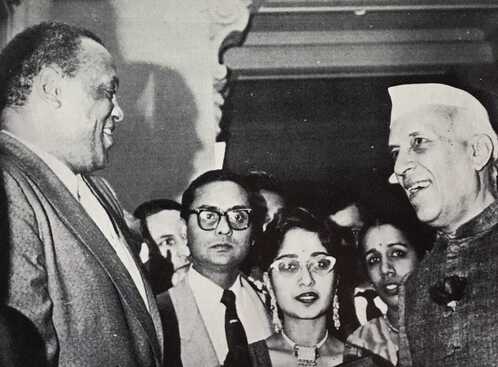
I am happy to know that an All-India Committee has been formed under the distinguished chairmanship of Chief Justice Chagla, to celebrate the sixtieth birthday of Paul Robeson. This is an occasion which deserves celebration not only because Paul Robeson is one of the greatest artists of our generation, but also because he has represented and suffered for a cause which should be dear to all of us - the cause of human dignity.

The celebration of his birthday is, therefore, something more than a tribute to a great individual. It is also a tribute to that cause for which he has stood and suffered.

I send all my good wishes to Paul Robeson on this occasion and I trust that he will have many long years before him to enrich the world with his great art.
​  
Vijay Laxmi Pandit

Vijay Laxmi Pandit was a freedom fighter and former diplomat

Paul was, besides being a great artist, an even greater human being. We spoke about his coming to India some day, where he said he would like to study Indian folk songs…The last time I saw Paul he was in Harlem. He was not too well, and the emotional damage he had suffered from the way he had been treated in his own country had hurt him beyond measure. He was a great American and America had rejected and humiliated him, or tried to do so. No one can humiliate a man of the dignity, courage and faith in values that Paul possessed.

Romesh Chandra

Romesh Chandra was former president of the World Peace Council

We think today of Paul Robeson not being allowed to sing by fascist whites. Paul Robeson sang for all---not only for his own black people, but for all America, white and black and brown and red-- for that real America which today stands for the freedom of all people and stands against United States imperialism at the same time, because it knows that there is no future for the people of the United States without a world at peace and a world in freedom….Paul Robeson himself is here. He did not die. He lives on in the hearts of all the people in the United States who fight for peace, who fight against racism and racial discrimination. The people of the United States shall win. Their struggle is one with the fight of all other peoples who are fighting against imperialism and oppression, who are fighting for peace.

​
​
M. C. Chagla
Shri M. C. Chalga was former Chief Justice of the Bombay High Court and former Cabinet minister

In my presidential address at the Paul Robeson 60th Birthday Celebration in April 1958, I stated that in Robeson’s view it was the duty of an artist to give expression, through his medium, to the sufferings of his people, to use his art to give them hope and solace, and the assurance that one day they would reach the promised land. Robeson felt that an artist must use his art as a powerful weapon to wage war against cruelty, oppression and inequality. Robeson was fighting against the insolence and arrogance of a “superior” race, and the sense of dominance which comes from a lack of pigmentation in the skin. 

I also drew the attention of my audience to the fact that there were 28 countries where Committees had been set up, and who were paying tributes to this great artist, and, as a matter of fact, the initiative for these celebrations came from a country in the West— England— one of America's allies. A very strong and powerful Committee had been set up there, and among the members were the Lord Bishop of Birmingham and Earl Baldwin of Bewdley, and I did not think that either of these venerable gentlemen could be accused of being communists. I ended my speech with the reminder: “We have been told on high authority that ‘it is the humble who will inherit the Kingdom of God’. If there is a God, and God is only another name for compassion and kindness, the Negroes must be dearer to Him than any other people, because today they are the oppressed and the downtrodden. I have no doubt that they would inherit the Kingdom 
of Heaven”.


Kamaladevi Chattopadhyaya
Kamaladevi Chattopadhyaya was a freedom fighter and socialist who worked greatly towards the revival of Indian handicrafts 

The Negro’s most outstanding genius is in his divine gift of song. The Negro music was born out of the boundless loneliness of his soul, seeking solace in the outpouring of his heart in melody. Its piercing pathos, its solemn simplicity, its gay swing, are indigenous to the Negro and a part of him…The Negro spirituals are unequalled in their delicate beauty. There are few finer musical treats than their church music. Nor must the fact be overlooked that many Negro composers have ventured into the broader fields of musical endeavour, including operatic music. 

And few forces have so successfully cut across the rigid race barriers as music. Those who have witnessed the enormous crowds of hundreds of thousands and more rise spontaneously to honour Paul Robeson or cheer lustily Marion Anderson, can perhaps gauge the wonder of this miracle. For when Paul Robeson sings he becomes something more than a singer. He transcends all human limitations and becomes the disembodied melody, which knows neither colour nor race. He interprets the ageless, deathless spirit of his lost land of Africa, his priceless heritage, before which even the hooded order of bigotry and hate spontaneously retreat. 

Rikhi Jaipal
Rikhi Jaipal was a former Indian diplomat

Paul Robeson entered our consciousness at an early age, during the years before the Second World War, when Asians were struggling to regain their nationhood from Western imperialism. We remember him as a great American, great in every sense, in body and soul, larger than life. It is not only the things that he stood for, but the manner in which he said and sang about them that compelled the attention of the world. He had a largeness of heart, and a loftiness of spirit which embraced the entire human race in the universal brotherhood of man. His voice, always vibrant with love and compassion, stirred the depths of one's being. It was a voice that could not be silenced. It demanded freedom and the fullness of the promise contained in the American Constitution for all American citizens regardless of race. It demanded also the right of the Negro people to take what was theirs---equality in the constitution. Paul Robeson related this American dream to the larger concept of the dream of one world in which every human being would freely enjoy equality in conditions of peace and security. 

This interrelationship between him and the peoples fighting for freedom everywhere was bound in the same web of history, human suffering and human aspiration. Inevitably, he became a part, and indeed a symbol, of the world movement for freedom and liberation. His songs were the purest expressions of the essence of humanity. Like the rest of us, he too was a victim of the white man's law and the white man's world. But not for long, because the victims of yesterday have now become the children of destiny of today and tomorrow. 


0 Comments
Forward>>

    Categories

    All

    RSS Feed

    Archives

    September 2025
    May 2025
    January 2025
    September 2024
    May 2024
    January 2024
    September 2023
    April 2023
    December 2022
    September 2022

Proudly powered by Weebly
  • Home
  • Current Issue
  • Past Issues
    • Issue 1
    • Issue 2
    • Issue 3
    • Issue 4
    • Issue 5
    • Issue 6
    • Issue 7
    • Issue 8
    • Issue 9
  • About
  • Contribute
